

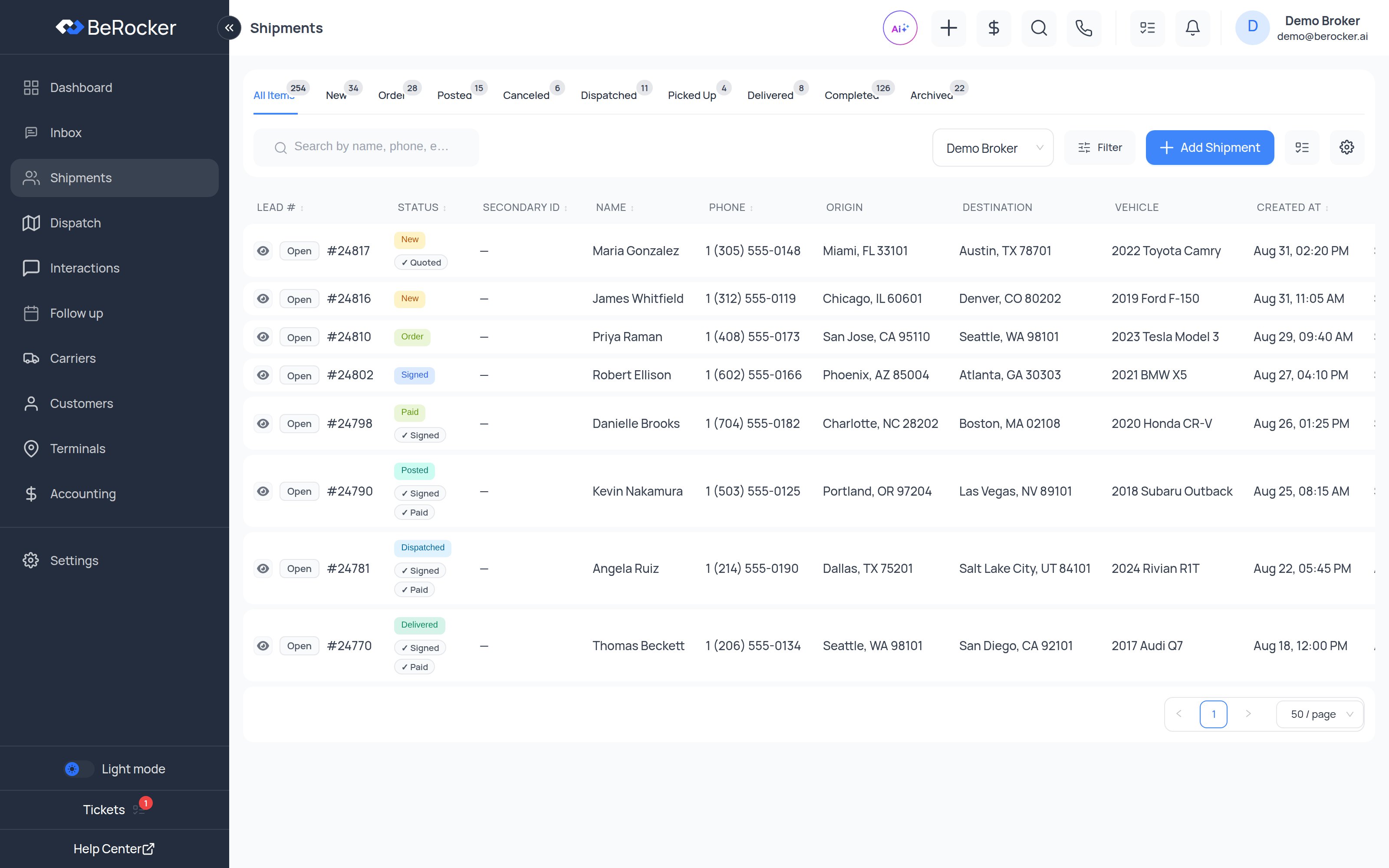
The status tabs
The tabs across the top are the pipeline, each with a live count: All Items · New · Order · Posted · Canceled · Dispatched · Picked Up · Delivered · Completed · ArchivedThe Order tab is a grouping, not a status. It folds Order, Signed and Paid together
so the tab bar stays short. The individual statuses are still on each shipment — use the
sub-filters below the tabs to split them apart.
Sub-filters
Three tabs show a second row of buttons that split the tab into buckets. The buckets partition the tab — their counts add up to the tab total.
None of these are set by hand. They are worked out from things that already exist — the quote
message that went out, the contract, the payment, the carrier offers — so they cannot go stale.
Finding what needs doing
The sub-filters are the fastest way to answer “what is waiting on me”:The toolbar
The table
Default columns include the lead number, status with milestone chips, secondary ID, customer name and phone, origin, destination, vehicle and created date. Open takes you to the conversation; the eye icon gives a quick preview without leaving the table. The milestone chips — ✓ Quoted, ✓ Signed, ✓ Paid — accumulate and never go backwards, so a Dispatched shipment still shows all three.Adding a shipment by hand
+ Add Shipment opens the form: customer, origin and destination, vehicles, dates, trailer type and price.- Phone is required unless your organization allows phone-less leads.
- A half-filled form is saved as a draft on your machine so a reload does not lose it — and it is cleared when you sign out, since brokerages share workstations.
Exporting
Shipments can be exported from Settings → Reports → Overview, where you can filter first and save the export configuration for next time. See Reports.Related
Inbox
Open any shipment’s conversation.
Dispatch
The live map of what is already on the road.
Pricing
Where the quoted price comes from.
Carriers and Loadboards
How posting and unposting behaves.